


Metal marking, a crucial process in various industries, encompasses a wide range of techniques and applications. As a metal marking supplier, I've witnessed firsthand the diverse contrasts that exist within this field. These contrasts not only define the different types of metal markings but also influence the choice of equipment and methods for specific applications.
Contrast in Marking Techniques
One of the most significant contrasts in metal marking lies in the techniques employed. Traditional methods such as mechanical engraving and chemical etching have been around for centuries. Mechanical engraving involves using a sharp tool to physically remove material from the metal surface, creating a permanent mark. This method offers high precision and durability, making it suitable for applications where the mark needs to withstand harsh environments. However, it is a relatively slow process and may not be suitable for large - scale production.
On the other hand, chemical etching uses chemicals to dissolve the metal surface, leaving behind a mark. It can produce fine details and is often used for decorative purposes. But it has environmental concerns due to the use of chemicals, and the depth of the mark may be limited.
In contrast, modern laser marking techniques have revolutionized the metal marking industry. Laser marking uses a high - intensity laser beam to modify the metal surface. There are different types of laser marking, including annealing, foaming, and ablation. Annealing creates a mark by heating the metal surface to change its color without removing material, resulting in a high - contrast, permanent mark. Foaming involves heating the metal to a point where it forms a bubble - like structure on the surface, creating a raised mark. Ablation, on the other hand, removes the metal material by vaporizing it, creating a deep and clear mark.
Our Stainless Steel Color Marking Mopa Fiber Laser Marking/Deep Engraving Machine is a prime example of advanced laser marking technology. It can perform both color marking and deep engraving on stainless steel, offering a high level of flexibility and precision. The Mopa fiber laser allows for adjustable pulse width and frequency, enabling different marking effects on various metals.
Contrast in Marking Quality
Another important contrast is in the quality of the marks. Traditional marking methods may produce marks with rough edges or inconsistent depths, especially when dealing with complex shapes or small details. For example, in mechanical engraving, the tool may wear over time, leading to variations in the mark quality. Chemical etching can also result in uneven marks due to differences in the chemical reaction across the metal surface.
Laser marking, however, provides a much higher level of mark quality. The laser beam can be precisely controlled, allowing for sharp edges, consistent depths, and high - resolution marks. This is particularly important in industries such as electronics, aerospace, and medical devices, where the accuracy and clarity of the mark are critical. Our 20W Compact Size Fiber Laser Marker is designed to deliver high - quality marks in a compact and efficient package. It can mark small components with great precision, making it ideal for applications where space is limited.
Contrast in Marking Speed
Marking speed is a crucial factor, especially in mass production environments. Traditional marking methods are generally slower compared to laser marking. Mechanical engraving requires the physical movement of a tool, which can be time - consuming, especially for large - area markings. Chemical etching also has a relatively slow process, as it involves multiple steps such as masking, chemical application, and cleaning.
Laser marking, on the other hand, is significantly faster. The laser beam can move across the metal surface at high speeds, allowing for rapid marking. Our 20w Four Split Marking Fiber Laser Marking Machine is designed for high - speed marking. It can divide the marking area into four parts and mark them simultaneously, greatly increasing the marking efficiency. This makes it suitable for industries such as automotive manufacturing, where large volumes of parts need to be marked quickly.
Contrast in Material Compatibility
Different metal marking techniques have varying degrees of compatibility with different types of metals. Traditional methods may be limited in terms of the metals they can mark effectively. For example, mechanical engraving may be difficult on very hard metals, as the tool may wear out quickly. Chemical etching may not work well on certain metals that are resistant to the etching chemicals.
Laser marking, however, is highly versatile in terms of material compatibility. It can mark a wide range of metals, including stainless steel, aluminum, copper, brass, and titanium. The laser parameters can be adjusted to suit the specific properties of each metal, ensuring a high - quality mark. This versatility makes laser marking a popular choice in industries where multiple types of metals are used.
Contrast in Cost
Cost is always a consideration in any manufacturing process. Traditional marking methods may have lower upfront costs, especially for small - scale operations. For example, mechanical engraving equipment can be relatively inexpensive to purchase. However, the long - term costs can be higher due to factors such as tool wear and maintenance. Chemical etching also has costs associated with the purchase and disposal of chemicals.
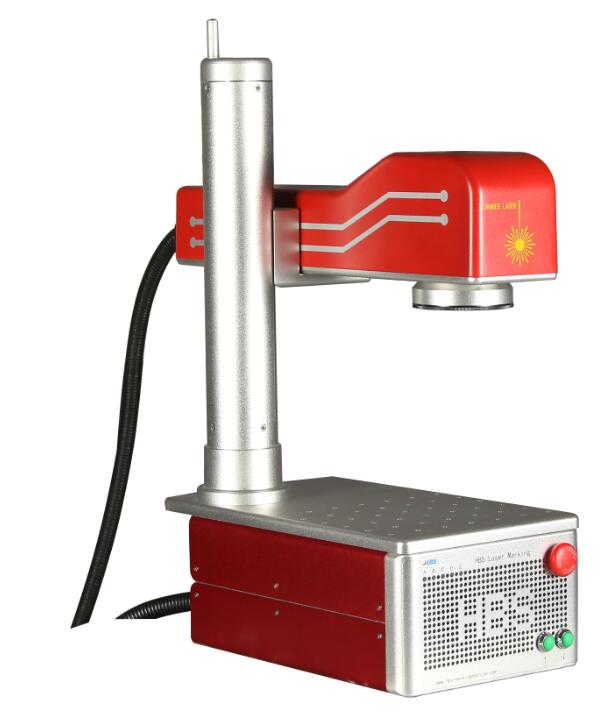

Laser marking equipment generally has a higher upfront cost. However, in the long run, it can be more cost - effective. Laser marking has lower operating costs, as there are no consumables such as tools or chemicals. The high - speed and high - quality marking capabilities also result in increased productivity, which can offset the initial investment.
Conclusion
In conclusion, the contrasts in metal marking are vast and significant. They impact every aspect of the marking process, from the choice of technique to the final quality of the mark. As a metal marking supplier, we understand the importance of these contrasts and strive to provide our customers with the best solutions. Whether you need high - speed marking for mass production, high - quality marks for precision applications, or versatility in marking different metals, we have the right equipment for you.
If you are interested in learning more about our metal marking solutions or would like to discuss your specific requirements, please feel free to contact us. We are ready to assist you in finding the most suitable metal marking equipment for your business.
References
- "Handbook of Laser Materials Processing" by Y. Lawrence Yao
- "Manufacturing Engineering and Technology" by S. Kalpakjian and S. R. Schmid


